Building systems for shop floors, not corner offices. Because the people doing the actual work shouldn't have to navigate seventeen screens to clock in a task.
An industrial world where frontline workers have the right information at the right time—reducing rework, improving safety, and eliminating cognitive burden.

We build operational solutions that remove complexity from workflows—without forcing anyone to think like a machine. Just clean, intuitive methods that work the way humans actually work. No feature bloat. No cognitive overload. Just technology that gets out of your way.
How we spent three years watching mechanics struggle with systems designed by people who'd never held a wrench—and decided to fix that.
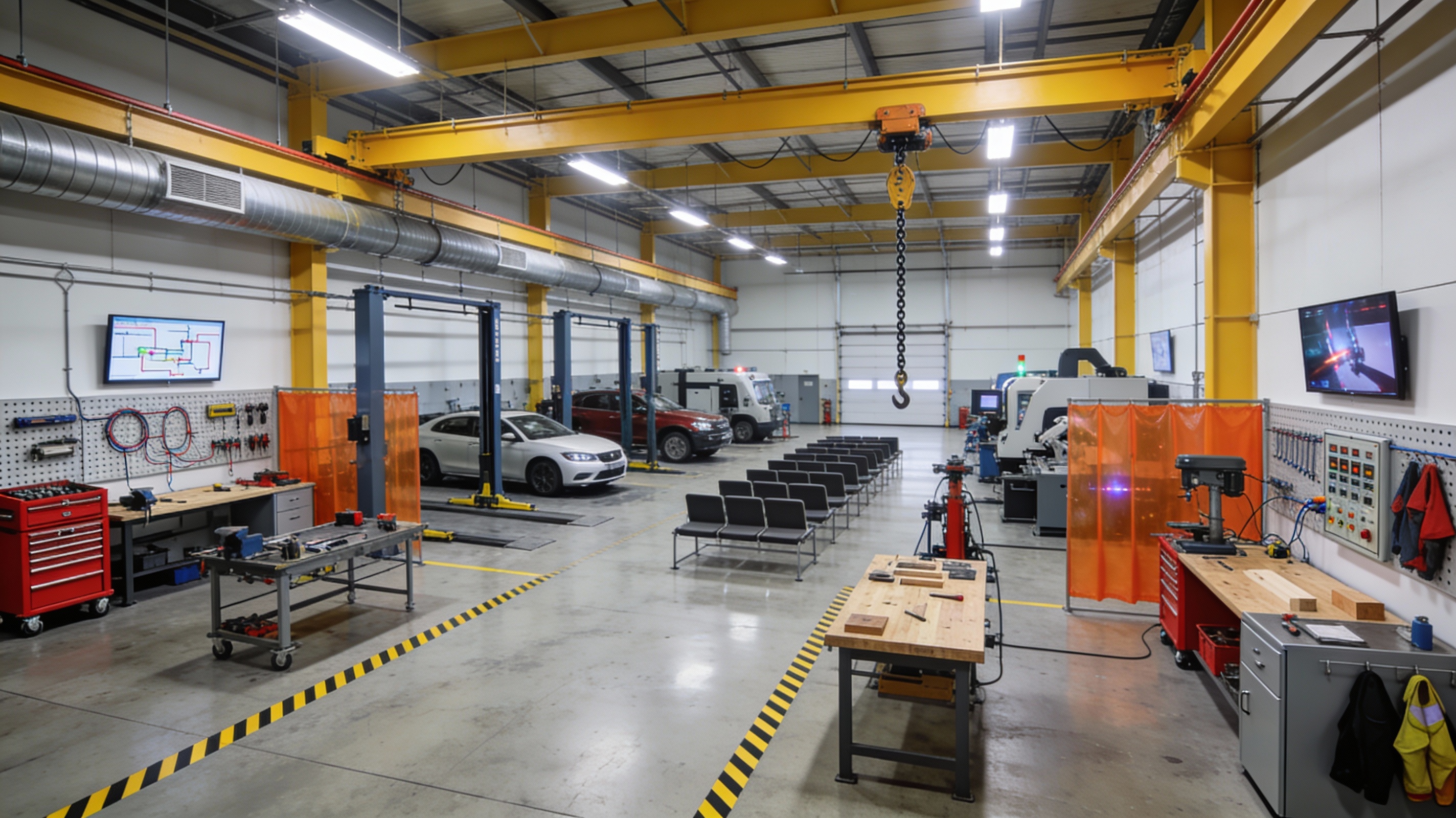
We walked into workshops expecting efficiency. What we found? Talented mechanics buried under mountains of paperwork, toggling between five different systems, and spending more time filing forms than fixing assets. The technology was designed for executives—not for the people actually turning wrenches. That's when we knew: the industry didn't need another complicated system. It needed operational solutions that actually worked.
We threw out everything we thought we knew about enterprise technology. No feature bloat. No cognitive overload. Just stepwise workflows, real-time validation, and interfaces so clean a new hire could master them in three minutes. We tested, broke things, rebuilt them simpler. Every decision passed one test: would a mechanic on hour nine of their shift find this intuitive? If not, back to the drawing board.
Production launch. Real workshops, real assets, real workflows. Sapphire went from concept to workhorse—Asset Management, Procurement, Maintenance, all built on the same principle: simplicity that doesn't compromise capability. Zero training required. 98% user satisfaction. 100% first-attempt success rates. Turns out, when you build solutions for humans, humans actually want to use them.
Four principles. Zero compromise. Infinite impact.
Every interface element has one job—and it does it brilliantly. No clutter, no confusion, no seventeen-step workflows. Just clear, purposeful design that gets out of your way.
Complex tasks break into digestible steps. Each step validates before you move forward. Mistakes get caught at the source—not after you've hit submit.
Every action tracked. Every decision visible. Complete audit trails for compliance, accountability, and peace of mind. No mysteries, no black boxes.
Data captured where work happens. Insights delivered where decisions are made. Everything syncs automatically, everywhere, all the time.
Founder & CEO
20+ years in manufacturing operations. Spent more time in workshops than boardrooms—and it shows in everything we build. Believes that the best technology is the kind you don't notice. Has never met a process that couldn't be simplified, or a mechanic who deserved complicated tools.
Started SCORP after watching one too many talented workers fight with systems designed by people who'd never done their job. Decided that operational excellence shouldn't require a computer science degree.
"Technology should enhance capability, not test patience. The moment your tools become the problem, you've already lost."
Came this far... to manage chaos?
Sapphire adapts to your workflows — not the other way around. Real operations. Real deadlines. Real accountability.
From the Knowledge Hub
42 deep-dive articles across 6 pillars — no filler, ever.
Browse the full Knowledge Hub
FundamentalsWhat Is Enterprise Asset Management? A Complete Guide
FundamentalsEAM vs ERP: The Key Difference Explained
FundamentalsAsset Lifecycle Management: From Acquisition to Disposal
FundamentalsPreventive vs Predictive Maintenance: Which Is Right?
FundamentalsBuilding a Maintenance Strategy from Zero
FundamentalsThe True Cost of Asset Downtime
FundamentalsISO 55000: The Global Standard for Asset Management
ModulesSapphire Work Order Management: A Complete Deep Dive
ModulesInventory Control in Sapphire: Zero Dead Stock
ModulesSapphire Purchase Module: From PO to Payment
ModulesAsset Tracking with Sapphire: Real-Time Visibility
ModulesSapphire Dashboard Intelligence: Metrics That Matter
ModulesPreventive Maintenance Scheduling in Sapphire EAM
ModulesDocument Management Inside Sapphire EAM
IndustriesEAM for Manufacturing: Keep the Line Running
IndustriesFacility Management with Sapphire
IndustriesHealthcare Asset Management: Compliance Meets Efficiency
IndustriesPower & Utilities: EAM at Enterprise Scale
IndustriesOil & Gas Maintenance Operations and EAM
IndustriesEAM for Real Estate Portfolios
IndustriesAirport Asset Management: Zero Tolerance for Failure
AnalyticsReal-Time Asset Analytics: From Data to Decision
AnalyticsPredictive Maintenance Analytics with Sapphire Smart
AnalyticsOEE Tracking: Beyond the Dashboard Number
AnalyticsKPI Design for EAM Programs
AnalyticsMTBF: Calculating and Reducing Mean Time Between Failure
AnalyticsMaintenance Cost Benchmarking: Industry Standards
AnalyticsAsset Health Scoring: A New Framework
Business ValueROI of EAM Software: A Practical Calculation Guide
Business ValueThe Hidden Cost of Spreadsheet-Based Maintenance
Business ValueEAM Implementation: Why Most Fail and How Yours Won't
Business ValueJustifying EAM Investment to the C-Suite
Business ValueFrom Reactive to Proactive: The Maintenance Maturity Model
Business ValueEAM and ESG: Sustainability Through Asset Intelligence
Business ValueHow to Choose Your EAM Vendor: A Buyer's Guide
Special EditionsSapphire 2025: What's New and What's Next
Special EditionsBuilt in Jaipur: The Scorptech Story
Special EditionsEAM in India: A Massive Market Coming of Age
Special EditionsSapphire vs SAP PM: An Honest Side-by-Side
Special EditionsAI in Asset Management: What's Real, What's Hype
Special EditionsCustomer Spotlight: Sapphire Deployed in 90 Days
Special EditionsEAM Glossary: 60 Terms Every Maintenance Manager Must Know